Table of Contents
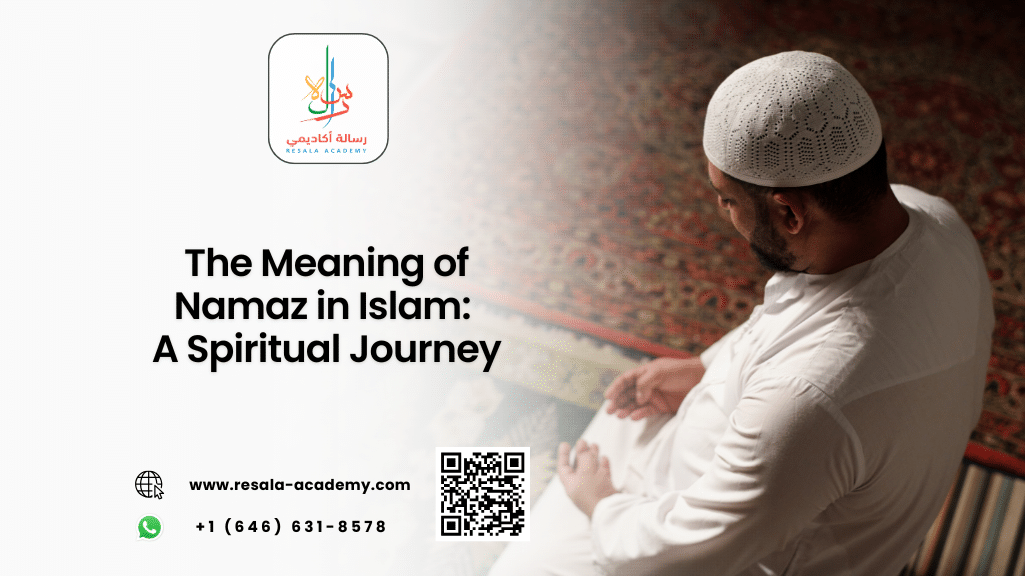
The Meaning of Namaz in Islam: A Spiritual Journey
Have you ever wondered why Muslims around the world pause five times a day, turn toward Makkah, and whisper words in Arabic—regardless of how busy life becomes?
For many non-Arabic-speaking believers, understanding the meaning of namaz in Islam is the first step toward experiencing a deeper, more meaningful connection with their Creator. Namaz is far more than a physical ritual; it is a sacred conversation between the worshipper and Allah, a daily rhythm that anchors the heart in faith.
Whether you are a new Muslim, a parent guiding your child, or a lifelong believer seeking to rekindle the spirit of your prayer, this article will walk you through what namaz truly means, why it is essential, and how you can learn to perform it with understanding and sincerity.
You’ll also discover how Resala Academy’s online Quran and Islamic studies programs help non-native learners master the prayer with confidence, clarity, and love for the language of revelation.
Let us begin this journey together, one sincere step at a time.
What Is the Meaning of Namaz in Islam? Defining the Sacred Prayer
Understanding the meaning of this vital act of worship begins with its language and its place in Islam.
The Linguistic Origin: From Namaz to Salah
The word “namaz” (نماز) is of Persian origin and is widely used across South Asia, Turkey, Iran, and other non-Arab Muslim cultures. Its Arabic equivalent is “Salah” (صَلَاة), which comes from the root letters ص-ل-و, meaning connection, supplication, and blessing.
Linguistically, namaz conveys the idea of bowing, humbling oneself, and turning toward the Divine. Spiritually, it represents a bond of devotion—a way for the believer to connect directly with Allah without any intermediary. Both “namaz” and “salah” refer to the same act of worship; the difference is only cultural and linguistic, not religious.
Namaz as the Second Pillar of Islam
Namaz stands as the second of the five pillars of Islam, right after the declaration of faith (Shahada). It is the most consistent and visible act of worship a Muslim performs, practiced five times each day at appointed times.
- Obligation: Every adult, sane Muslim is required to pray five daily prayers.
- Reward: It is the first deed a person will be questioned about on the Day of Judgment.
- Foundation: A believer’s relationship with faith is measured by the strength and sincerity of their namaz.
The Deeper Spiritual Meaning of Namaz in Daily Life
Beyond its physical motions, namaz is a transformative spiritual experience that nourishes every aspect of a believer’s being.
A Daily Appointment with Allah
Imagine receiving a personal invitation from the King of the heavens and the earth—five times a day. That is the essence of namaz. Each prayer is a scheduled meeting where the worshipper stands before Allah, speaks to Him, bows before Him, and prostrates in humility.
This consistent connection cultivates mindfulness, patience, and gratitude. It reminds the Muslim that no matter how consuming worldly affairs may be, there is always a moment in the day to return to what truly matters: submission to Allah.
Mental, Emotional, and Physical Benefits
Namaz is holistic worship. When performed with presence and sincerity, it offers benefits that extend far beyond the spiritual realm:
- Mental clarity: Pausing to pray breaks the stress cycle and refocuses the mind.
- Emotional peace: The recitation of the Quran and dhikr (remembrance) calms anxious hearts.
- Physical movement: Standing, bowing, and prostrating engage the body in gentle, rhythmic movement.
- Moral discipline: Regular prayer trains the soul to resist sin and embrace righteousness.
Read more about: Arabic for Peace Be Upon You: Meaning, Reply & Usage
The Five Daily Prayers: Structure of Namaz Practice
To fully grasp the meaning of namaz in Islam, it helps to understand its structure and timing.
Prayer Times and Rak’ah Structure
Each of the five daily prayers is performed at a specific time window and consists of a defined number of rak’ahs (units of prayer). A rak’ah includes standing, reciting Quran, bowing (ruku’), and prostrating (sujood).
| Prayer Name | Time of Day | Obligatory Rak’ahs |
|---|---|---|
| Fajr | Dawn before sunrise | 2 |
| Dhuhr | Just after midday | 4 |
| Asr | Late afternoon | 4 |
| Maghrib | Immediately after sunset | 3 |
| Isha | Night until dawn | 4 |
These fixed times structure the believer’s entire day around remembrance of Allah, ensuring faith is never forgotten amid life’s distractions.
Inside a Single Rak’ah
Every rak’ah follows a clear sequence that combines words, postures, and intentions:
- Takbir — Saying Allahu Akbar to begin.
- Qiyam — Standing while reciting Surah Al-Fatiha and another passage.
- Ruku’ — Bowing with hands on knees, glorifying Allah.
- Qiyam again — Rising and praising Allah.
- Sujood — Prostrating twice, the closest a servant comes to the Lord.
- Tashahhud and Salam — Sitting, testifying to faith, and concluding with greetings of peace.
Learning these steps correctly is simpler than many beginners fear, especially with the structured support available through online Quran classes guided by qualified Egyptian tutors.
Qur’an and Sunnah Evidence on the Meaning of Namaz
The profound significance of prayer is rooted in revelation. Here are authentic references that illuminate its true purpose.
Quranic Verses on the Purpose of Prayer
Allah Himself has clearly defined the meaning and purpose of namaz in multiple verses of the Quran.
Surah Ta-Ha (20:14)
إِنَّنِىٓ أَنَا ٱللَّهُ لَآ إِلَـٰهَ إِلَّآ أَنَا۠ فَٱعْبُدْنِى وَأَقِمِ ٱلصَّلَوٰةَ لِذِكْرِىٓ
“Indeed, I am Allāh. There is no deity except Me, so worship Me and establish prayer for My remembrance.”
Explanation: This verse, revealed directly to Prophet Musa (Moses) ﷺ, reveals the core purpose of namaz—to remember Allah. Prayer is not a ritual for its own sake; it is a divine means to keep the heart alive with awareness of the Creator.
Surah Al-Ankabut (29:45)
ٱتْلُ مَآ أُوحِىَ إِلَيْكَ مِنَ ٱلْكِتَـٰبِ وَأَقِمِ ٱلصَّلَوٰةَ ۖ إِنَّ ٱلصَّلَوٰةَ تَنْهَىٰ عَنِ ٱلْفَحْشَآءِ وَٱلْمُنكَرِ ۗ وَلَذِكْرُ ٱللَّهِ أَكْبَرُ ۗ وَٱللَّهُ يَعْلَمُ مَا تَصْنَعُونَ
“Recite, [O Muḥammad], what has been revealed to you of the Book and establish prayer. Indeed, prayer prohibits immorality and wrongdoing, and the remembrance of Allāh is greater. And Allāh knows that which you do.”
“ (Quran.com 29:45)
Explanation: A consistent and heartfelt namaz acts as a moral safeguard, shielding the believer from sinful behavior. When prayer becomes a habit of the heart, righteousness becomes a habit of the life.
The Prophet’s Teachings on the Power of Namaz
The beloved Prophet Muhammad ﷺ illustrated the spiritual purifying power of prayer with a vivid and unforgettable example.
Sahih al-Bukhari
آمُرُكُمْ بِأَرْبَعٍ، وَأَنْهَاكُمْ عَنْ أَرْبَعٍ الإِيمَانِ بِاللَّهِ ـ ثُمَّ فَسَّرَهَا لَهُمْ شَهَادَةُ أَنْ لاَ إِلَهَ إِلاَّ اللَّهُ، وَأَنِّي رَسُولُ اللَّهِ، وَإِقَامُ الصَّلاَةِ، وَإِيتَاءُ الزَّكَاةِ، وَأَنْ تُؤَدُّوا إِلَىَّ خُمُسَ مَا غَنِمْتُمْ، وَأَنْهَى عَنِ الدُّبَّاءِ وَالْحَنْتَمِ وَالْمُقَيَّرِ وَالنَّقِيرِ
“I order you to do four things and forbid you from four things: To believe in Allah” – and then he explained it to them “to testify that none has the right to be worshipped but Allah and that I am Allah’s Messenger (ﷺ), to establish the prayers (at the stated times), to pay the Zakat (obligatory charity), to hand me the Khumus (fifth) if you acquire spoils of war. And I forbid from (using) Dubba, Hantam, Muqaiyyar, and Naqir (all these were utensils used for the preparation of alcoholic drinks).
Explanation: This beautiful parable teaches that each of the five daily prayers cleanses the soul just as water washes the body. For the non-native learner, this hadith answers a common question: Why five times a day? Because our hearts, like our bodies, need frequent purification.
Key Arabic Phrases Recited in Namaz
Learning the meaning behind what you say in prayer transforms mechanical recitation into a heartfelt conversation with Allah.
Essential Phrases and Their Meanings
Here are some of the most important Arabic expressions used in every namaz, explained for non-native speakers:
ٱللَّهُ أَكْبَر (Allahu Akbar) — “Allah is the Greatest.” This phrase is said to begin each prayer and to mark every transition between postures. It reminds the worshipper that nothing in the world is greater than Allah.
سُبْحَانَ رَبِّيَ ٱلْعَظِيم (Subhana Rabbiyal Azeem) — “Glory is to my Lord, the Most Great.” Recited during ruku’ (bowing), this phrase expresses awe of Allah’s majesty.
سُبْحَانَ رَبِّيَ ٱلْأَعْلَىٰ (Subhana Rabbiyal A’la) — “Glory is to my Lord, the Most High.” Said during sujood (prostration), the position of closest nearness to Allah.
سَمِعَ ٱللَّهُ لِمَنْ حَمِدَهُ (Sami’a Allahu liman hamidah) — “Allah hears whoever praises Him.” A profound reminder that every whisper of praise is heard by the Most High.
Why Correct Pronunciation Transforms Your Prayer
Arabic pronunciation is not only about beauty—it is about meaning. A single mispronounced letter can change the entire intention of a word. This is why Tajweed, the science of correct Quranic recitation, is considered essential.
At Resala Academy, non-native learners are guided through Arabic letters, sounds, and rhythms step by step with dedicated online Tajweed classes, ensuring every syllable in namaz is spoken with accuracy and heart.
Begin Your Quran and Prayer Journey with Resala Academy
Understanding the meaning of namaz is the beginning; living it with clarity and love is the reward. Whether you are just learning your first prayer or refining years of practice, structured guidance makes all the difference.
Benefits Tailored for Non-Native Learners
Resala Academy is specifically designed to support English-speaking Muslims, reverts, parents, and entire families in their journey to master Quran recitation, Arabic understanding, and Islamic practice. Here’s what sets the experience apart:
- Native Egyptian tutors with years of Quran and Arabic teaching expertise
- Flexible scheduling that adapts to every time zone and lifestyle
- One-on-one classes for personalized attention and steady progress
- Female tutors available for ladies and girls in a fully comfortable environment
- Professional certificates issued upon completing each course level
- Affordable pricing and a free trial class with no obligation
- Top-rated on both Google and Trustpilot
You don’t need to navigate this journey alone. Book your free trial class with Resala Academy today and take the first confident step toward a prayer life filled with understanding, beauty, and peace.
Frequently Asked Questions
1. What does the word “namaz” literally mean?
“Namaz” is a Persian word that carries the meaning of bowing, humbling oneself, and offering worship. It refers to the same act of prayer that is called Salah in Arabic—both terms describe the five daily prayers in Islam.
2. Is namaz the same as salah?
Yes, namaz and salah refer to the identical act of worship. The only difference is linguistic: Arabic-speaking Muslims call it salah, while Urdu, Persian, Turkish, and South Asian Muslims commonly call it namaz. Both are equally correct and acceptable.
3. Why is namaz considered obligatory in Islam?
Namaz is the second pillar of Islam, directly commanded by Allah throughout the Quran and established by the Prophet Muhammad ﷺ. It is obligatory because it builds the believer’s daily connection with Allah, purifies the soul, and disciplines the heart against wrongdoing.
4. Can I learn namaz online as a complete beginner?
Absolutely. Many non-native speakers begin with zero prior knowledge and progress confidently through guided online lessons. Programs like those offered by Resala Academy break namaz into step-by-step stages, teaching Arabic pronunciation, meanings, and postures with patience and care.
5. How can I develop focus and concentration during namaz?
Focus in namaz grows through understanding the Arabic words, slowing down recitation, and regularly reminding yourself that you are standing before Allah. Learning translations, studying Tajweed, and practicing consistently are powerful tools for achieving the spiritual presence known as khushū’.
Conclusion
The meaning of namaz in Islam is far deeper than a set of movements—it is the heartbeat of a believer’s spiritual life, a daily conversation with Allah, and a continual source of peace, discipline, and purification. From the linguistic roots of the word itself to the profound wisdom of the Quran and Sunnah, every aspect of prayer is designed to elevate the soul and guide the heart back to its Creator.
Whether you are beginning your journey or deepening a lifelong practice, learning namaz with sincere understanding is one of the most transformative acts you can pursue. Resala Academy stands ready to walk alongside you, offering native Arabic tutors, flexible learning, and trusted guidance for non-native learners across the globe. Take the first step today—your prayer, your faith, and your heart are waiting.