Table of Contents
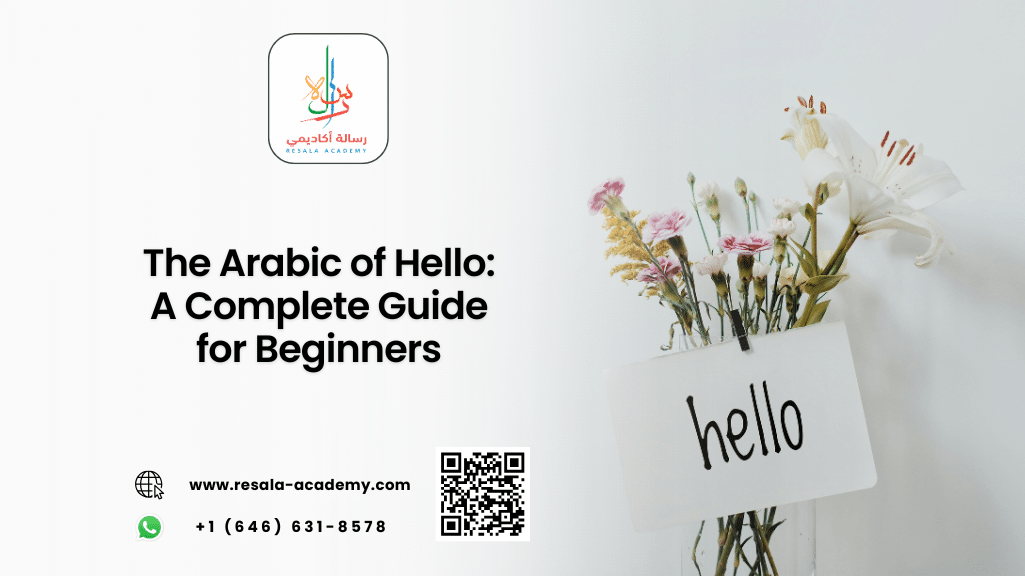
The Arabic of Hello: A Complete Guide for Beginners
Imagine walking into a bustling café in Cairo, attending a business meeting in Dubai, or warmly greeting a new Arabic-speaking friend online. The very first word you utter shapes the entire interaction. Learning the Arabic of hello isn’t simply about memorizing vocabulary — it’s about unlocking one of the world’s most poetic, expressive, and spiritually rich languages.
For millions of non-native learners, the journey into Arabic begins with a single greeting. Yet unlike English, where “hello” covers nearly every social situation, Arabic offers a beautiful range of greetings, each shaped by time, formality, relationship, and faith. Understanding these nuances allows you to connect meaningfully with over 400 million Arabic speakers across the globe.
In this guide, we’ll explore the full landscape of Arabic greetings — formal, informal, religious, secular, and regional. Whether you’re preparing for travel, reconnecting with heritage, or beginning your learning journey, Resala Academy’s online Arabic programs will help you master these expressions confidently through one-on-one sessions with native Egyptian tutors.
The Meaning of Hello in Arabic: More Than Just a Word
Arabic greetings carry a depth that goes far beyond a simple acknowledgment of another person.
Greetings from Cultural Bridges
In Arab culture, greetings are considered sacred social glue. They express care, honor, and respect — often opening a brief but meaningful exchange that sets the tone for everything that follows. A rushed or incorrect greeting may feel cold, while a warm, well-chosen one can build instant rapport.
This is why the meaning of hello in Arabic matters so much to learners. Each greeting reflects values deeply rooted in hospitality, faith, and community — values that native Arabic speakers recognize and appreciate, even in beginners taking their first steps.
Why Context Shapes Every Greeting
Arabic greetings change based on time of day, religious context, formality, and region. The word you choose conveys not only “hello” but also your awareness of these subtleties. Saying As-salamu alaykum to a stranger signals respect and cultural fluency, while Ahlan feels more appropriate among close friends.
What Is the Translation of Hello in Arabic? The Core Greetings You Should Know
Let’s explore the most common ways to say hello, each with its own purpose and flavor.
السلام عليكم (As-salamu alaykum) — “Peace Be Upon You”
This is the most widely recognized and respected greeting in the Arabic-speaking world. Literally translated, it means “peace be upon you.” Used by Muslims globally, it’s welcomed warmly in virtually any formal or informal setting.
- Arabic: السلام عليكم
- Transliteration: As-salamu alaykum
- Response: وعليكم السلام — Wa alaykum as-salam (“And peace be upon you too”)
مرحبا (Marhaba) — The Friendly Universal Hello
Marhaba is a warm, secular greeting suitable for anyone, regardless of religion or formality. It roughly means “welcome” but functions as a cheerful “hello.”
- Arabic: مرحبا
- Transliteration: Marhaba
- Response: مرحبتين — Marhabtain (“Two hellos” — a graceful double-welcome)
أهلا (Ahlan) — The Casual “Hi”
This is the relaxed, friendly greeting you’ll hear between peers, classmates, and colleagues. It’s short, warm, and easy to pronounce.
- Arabic: أهلا
- Transliteration: Ahlan
- Response: أهلا بك (Ahlan bik) to a male, or أهلا بكِ (Ahlan biki) to a female
أهلا وسهلا (Ahlan wa sahlan) — “Welcome”
When an Arabic speaker wants to express warm hospitality, especially to a guest, they use this beautiful phrase. It communicates “you are family here.”
- Arabic: أهلا وسهلا
- Transliteration: Ahlan wa sahlan
- Usage: Welcoming a guest into a home, office, or gathering
Time-Based Greetings: Expanding Your Arabic Hello Vocabulary
Arabic has specific greetings for different times of day, similar to “good morning” or “good evening” in English.
Morning, Afternoon, and Evening Greetings
Using time-appropriate greetings shows sophistication and cultural awareness. Here are the essentials every learner should know:
- صباح الخير (Sabah al-khair) — Good morning. Literally “morning of goodness.” The reply is صباح النور (Sabah an-nur) — “morning of light.”
- مساء الخير (Masa’ al-khair) — Good evening. Used from early afternoon onward. Reply: مساء النور (Masa’ an-nur).
- تصبح على خير (Tusbih ala khair) — Goodnight, or “may you wake up to goodness.” A warm way to end the day.
Complete Arabic Greetings Quick-Reference Table
Here’s a handy comparison of all essential greetings you’ve learned so far.
| Arabic | Transliteration | English Meaning | Best Used For |
|---|---|---|---|
| السلام عليكم | As-salamu alaykum | Peace be upon you | Formal, religious, universal |
| مرحبا | Marhaba | Hello / Welcome | Everyday, neutral settings |
| أهلا | Ahlan | Hi | Casual, friendly |
| أهلا وسهلا | Ahlan wa sahlan | Welcome | Hosting guests |
| صباح الخير | Sabah al-khair | Good morning | Morning hours |
| مساء الخير | Masa’ al-khair | Good evening | Afternoon & evening |
| كيف حالك؟ | Kayf halak? | How are you? | Follow-up greeting |
This kind of visual learning tool mirrors the structured approach used in Resala Academy’s beginner Arabic courses, where clarity and practical application come first.
How to Pronounce the Arabic of Hello Correctly
Pronunciation is where many learners stumble — but it’s also where small victories build lasting confidence.
Mastering Sounds Unique to Arabic
Arabic has several sounds that don’t exist in English. Three are especially important for greetings:
- The “ع” (ayn) — A deep, throaty sound heard in alaykum. Produced from the back of the throat, not the mouth.
- The “ح” (ḥa) — A strong, breathy “h” sound in Marhaba. Heavier and more forceful than the English “h.”
- The “خ” (kha) — A raspy sound similar to the German “ch” in Bach, heard in Sabah al-khair.
Common Pronunciation Mistakes to Avoid
- Rushing the “ayn”: Beginners often skip it, saying “a-laykum” instead of “alaykum.” Practice slowly with throat engagement.
- Softening the “ḥa”: Don’t confuse it with the English “h.” It requires more intense airflow.
- Flat intonation: Arabic greetings often carry a musical lilt that conveys warmth. Listening to native speakers is essential.
With native Egyptian tutors at Resala Academy, learners receive real-time pronunciation feedback — an advantage that apps and recorded lessons simply cannot match.
Responding to Arabic Greetings: Completing the Exchange
In Arabic culture, greetings are never one-sided. The response carries equal importance and often mirrors or elevates the warmth of the original greeting.
The Art of Reply in Arabic Conversations
Here are the essential response pairs every learner should master:
- Greeting: As-salamu alaykum → Response: Wa alaykum as-salam wa rahmatullahi wa barakatuh (“And peace, mercy, and blessings be upon you too”)
- Greeting: Marhaba → Response: Marhabtain (“Two hellos”) or simply Ahlan
- Greeting: Sabah al-khair → Response: Sabah an-nur (“Morning of light”)
Notice how replies often include a poetic enhancement — adding “light” to “goodness,” or doubling the welcome. This reflects the warmth embedded in Arab hospitality.
Read more about: Arabic Numbers 1 to 100: A Complete Guide for Beginners
Regional Variations of the Arabic of Hello
While Modern Standard Arabic (MSA) is understood everywhere, regional dialects add flavor and familiarity.
Egyptian, Levantine, and Gulf Differences
| Region | Common Greeting | Notes |
|---|---|---|
| Egypt | Ahlan / Ezzayak? | Ezzayak means “how are you?” casually |
| Levant (Syria, Lebanon, Jordan) | Marhaba / Kifak? | Warm, melodic delivery |
| Gulf (Saudi Arabia, UAE) | As-salamu alaykum / Hala | Hala is a friendly hi |
| North Africa | Salam / Labes? | Influenced by French and Berber |
Because every tutor at Resala Academy is a native Egyptian speaker, learners gain authentic exposure to one of the most widely understood Arabic dialects — often called the lingua franca of Arabic media, film, and music.
Take the First Step Toward Arabic Fluency at Resala Academy
You’ve just learned the Arabic of hello from multiple angles — formal, casual, time-based, and regional. Now imagine taking that knowledge further: holding real conversations, reading the Quran, watching Arabic films without subtitles, or communicating with family across generations.
At Resala Academy, non-native learners thrive because:
- Every tutor is a native Egyptian Arabic speaker, professionally trained to teach non-native learners.
- Classes are one-on-one, scheduled around your time zone and personal routine.
- Female tutors are available for learners who prefer a comfortable, ladies-only learning space.
- Each completed level includes a professional certification to mark your progress.
- Affordable pricing brings expert tutoring within reach of families worldwide.
- A free trial class lets you experience the teaching style with zero obligation.
Whether you’re a complete beginner or polishing advanced skills, book your free trial class with Resala Academy today and discover how natural Arabic learning feels with the right guide.
Frequently Asked Questions
1. What’s the easiest Arabic greeting to learn as a complete beginner?
Start with Marhaba (مرحبا). It’s warm, neutral, easy to pronounce, and appropriate in nearly every setting. Once you’re comfortable, progress to As-salamu alaykum for more formal or religious contexts.
2. Is it okay for non-Muslims to say “As-salamu alaykum”?
Absolutely. While the phrase has deep Islamic roots, it’s used across religions in the Arab world as a respectful, heartfelt greeting. Arabic speakers genuinely appreciate non-Muslims who use it thoughtfully.
3. How are Resala Academy’s Arabic classes conducted online?
All lessons are live, one-on-one video sessions with a native Egyptian tutor. Students use interactive tools, tailored lesson plans, and real-time pronunciation coaching — all flexible to fit any global time zone.
4. Can I learn Arabic greetings without studying the Arabic alphabet first?
Yes. Many learners start with transliterated Arabic (Roman letters) to build conversational confidence quickly. However, learning the Arabic script soon unlocks much faster long-term progress, and Resala Academy’s tutors guide this journey step by step.
5. How long does it take to speak basic Arabic conversationally?
With consistent one-on-one lessons, most beginners reach basic conversational fluency within 3–6 months. Progress depends on practice frequency, tutor quality, and daily immersion through listening and speaking.
Conclusion
Learning the Arabic of hello is far more than memorizing a single word — it’s a gateway into a language shaped by 1,400 years of poetry, faith, and hospitality. Each greeting you master brings you closer to a meaningful connection with Arabic speakers and a deeper appreciation of the culture behind the words.
With the right guidance, steady practice, and native-speaking tutors, your journey from saying Marhaba to holding fluent conversations becomes both achievable and deeply enjoyable. Resala Academy is ready to walk that journey with you — one greeting, one lesson, and one confident word at a time.