Table of Contents
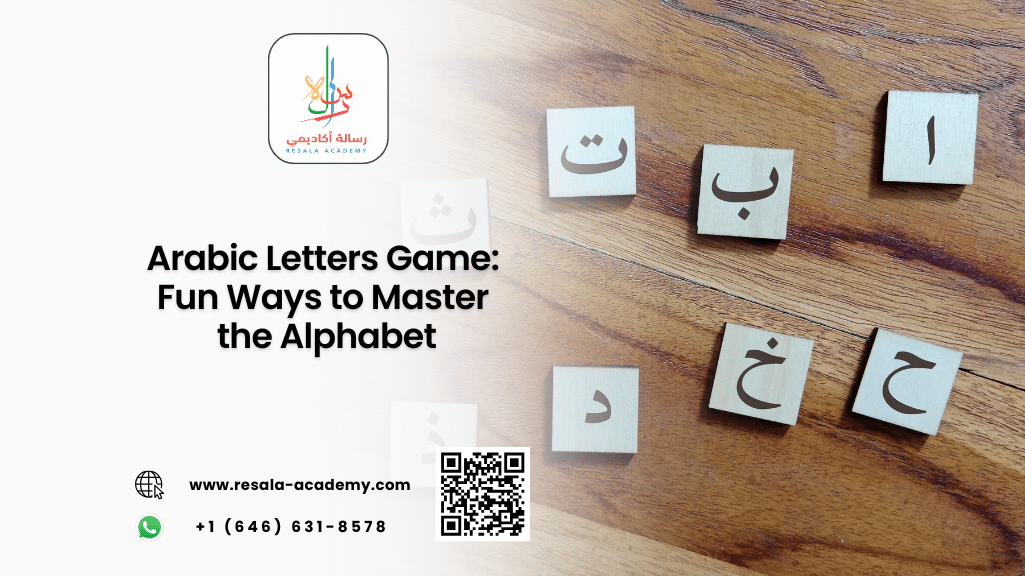
Arabic Letters Game: Fun Ways to Master the Alphabet
What if the hardest part of learning Arabic — memorizing 28 unfamiliar letters — could feel more like play than study? For parents watching their children struggle with flashcards or adults staring at a page of seemingly identical curves and dots, an arabic letters game can transform frustration into genuine progress. Games tap into how our brains naturally absorb new information: through repetition, reward, and active engagement.
The Arabic alphabet is one of the most beautifully systematic writing systems in the world, yet its right-to-left orientation and connected letter forms present a real challenge for non-native learners. That challenge becomes far more manageable — and even enjoyable — when approached through interactive, game-based strategies.
Whether you are a parent looking for engaging tools for your child or an adult beginner taking your first steps, this guide walks you through the most effective arabic letters games, quiz formats, and practice methods that build lasting recognition and confidence.
At Resala Academy, learners of every age discover structured, interactive pathways to Arabic fluency guided by native Egyptian tutors — and it all starts with the letters.
Why an Arabic Letters Game Changes Everything for New Learners
Games are not just entertainment — they are among the most effective learning tools available, especially for language acquisition. Here is why incorporating an arabic letters game into your study routine yields faster, deeper results.
How Gamification Accelerates Letter Recognition
When you engage with Arabic letters through a game, your brain processes the information differently than it does during passive reading or rote memorization. Each round of play creates a micro-challenge, and each correct answer triggers a small dopamine response that reinforces the memory. Over time, this cycle builds automatic recognition — the ability to see a letter and instantly know its name and sound without conscious effort.
Research in educational psychology consistently shows that active recall, being prompted to retrieve information, strengthens memory far more than passive review. An arabic letters games quiz, for instance, forces the learner to actively identify each letter, which accelerates the encoding process significantly.
The Unique Challenge of Arabic for Non-Native Eyes
Arabic letters are not simply 28 static shapes. Each letter can take up to four different forms depending on its position within a word: isolated, initial, medial, and final. For learners accustomed to Latin script, this is an entirely new concept.
Consider the letter ع (ʿayn), which produces a deep, throaty sound that does not exist in English. In its isolated form it looks quite different from its medial form nestled inside a word. Games that present letters in all four positions train the eye and the mind to recognize these variations naturally, without overwhelming the learner with grammar rules too early.
Read more about: Modern Standard Arabic: Your Complete Guide to Learning the Language of the Arab World
Best Types of Arabic Letters Games for Every Learning Style
Not every learner responds to the same format. A well-rounded approach combines several types of arabic letters games to keep motivation high and cover different cognitive skills.
1. Matching and Memory Games
Classic memory card games work exceptionally well for Arabic letters. In this format, cards are laid face-down in a grid. One card displays the Arabic letter, and its match shows the letter’s name, transliteration, or an image of a word that begins with that letter. For example, a card showing ب (bā’) might be matched with a picture of بَيْت (bayt), meaning “house.”
This type of game strengthens visual memory and creates strong associations between a letter’s shape and its sound. Parents often find matching games ideal for children ages four to eight because they are tactile, simple to understand, and endlessly replayable.
2. Arabic Letters Games Quiz Formats
Quiz-style games introduce a healthy element of challenge and self-assessment. These can take many forms:
- Multiple choice: The learner hears an audio clip of a letter’s sound and selects the correct letter from four options, building both listening and visual recognition simultaneously.
- Timed identification: Letters flash on screen and the learner must name or type them before time runs out, sharpening speed and confidence under gentle pressure.
- Fill-in-the-blank: A word appears with one letter missing, and the learner must choose the correct letter to complete it, reinforcing contextual awareness of how letters function inside real vocabulary.
An arabic letters games quiz is particularly effective for intermediate beginners who already have some familiarity with the alphabet and need to sharpen their speed and accuracy. At Resala Academy, tutors often incorporate quiz-based exercises into one-on-one sessions to gauge a student’s progress and identify letters that need extra attention.
3. Tracing and Handwriting Games
Learning to write Arabic letters — from right to left, with precise dot placement — is a skill that games can make surprisingly enjoyable. Digital tracing games guide the learner’s finger or stylus along the correct stroke order for each letter, providing instant feedback when the path deviates. This kinesthetic reinforcement is powerful because it engages muscle memory alongside visual memory.
For example, tracing the letter ث (thā’) teaches learners that the base shape is identical to ب (bā’) and ت (tā’), but the three dots placed above distinguish it. Games that highlight these family relationships help learners see the Arabic alphabet not as 28 random shapes but as a logical, interconnected system of visual patterns.
4. Audio Recognition Games
Arabic contains sounds that are entirely absent from English and most European languages. Letters like خ (khā’), which produces a guttural, raspy sound from the back of the throat, or ض (ḍād), a heavy, emphatic “d” sound that is unique to Arabic, require careful ear training. In fact, ض is so distinctive that it gives the language one of its traditional names: لُغَة الضَّاد (lughat al-ḍād, meaning “the language of the ḍād”).
Audio-based games that ask learners to distinguish between similar-sounding letters build the listening skills essential for accurate pronunciation later on. Pairing a letter like س (sīn) with the word سَلَام (salām, meaning “peace”) gives the sound an emotional anchor that makes it far more memorable than an abstract phonetic drill.
Read more about: Arabic Prepositions: The Complete Guide for Quran Learners
How to Learn Arabic Letters Game by Game: A Practical Roadmap
Knowing which games exist is one thing; knowing how to sequence them for maximum progress is another. Here is a step-by-step approach to learn arabic letters game by game, building from zero to confident recognition.
Step 1 — Master the Isolated Forms First
Begin with games that present each letter in its isolated, standalone form. Focus on small groups of three to five letters at a time rather than all 28 at once. A strong starting group is ا (alif), ب (bā’), ت (tā’), ث (thā’), and ج (jīm). The first four share a similar base shape, and the fifth introduces a completely new form, keeping the brain engaged through contrast.
Step 2 — Introduce Positional Variations
Once a learner can recognize isolated letters reliably, games should begin presenting the initial, medial, and final forms. The letter ك (kāf) is a good illustration: its shape shifts noticeably depending on where it sits in a word. Matching games that pair the isolated form with its connected variants are especially useful at this stage, building the pattern recognition needed for real reading.
Step 3 — Layer in Sound and Writing
After visual recognition is solid, add audio identification games and tracing exercises. This multi-sensory layering — seeing, hearing, and writing — creates robust neural pathways that make the letters stick. Resala Academy’s structured courses follow a similar progression, with native Egyptian tutors guiding each student through these stages at a personalized pace, ensuring no letter is left behind.
What Makes a Quality Arabic Letters Game Worth Your Time
With hundreds of apps and online tools available, it helps to know what separates genuinely effective learning tools from flashy distractions.
Native-Quality Audio Is Non-Negotiable
Any game that teaches Arabic letter sounds must feature audio recorded by a native Arabic speaker. Mispronounced letters at the early stages can create habits that are extremely difficult to correct later. This is one area where working with a live tutor provides an irreplaceable advantage.
A tutor can hear your pronunciation in real time and correct subtle errors — such as the difference between ح (ḥā’), a breathy, whispered “h” from the throat, and هـ (hā’), a lighter “h” similar to the English letter — that no app can detect.
Progressive Difficulty and Adaptive Feedback
The strongest arabic letters games start simple and gradually increase complexity as the learner improves. Look for games that track performance and adapt, spending more time on letters the learner finds difficult and moving quickly past those already mastered.
This adaptive approach mirrors the personalized instruction that Resala Academy’s native tutors provide during live sessions, where every lesson responds to the student’s real-time needs.
Cultural Context and Real Vocabulary
Games that embed letters within real Arabic words and culturally meaningful contexts are far more valuable than those that treat letters as abstract shapes. Learning that ن (nūn) starts the word نُور (nūr, meaning “light”) gives the letter purpose and emotional resonance.
Context transforms rote memorization into meaningful understanding — and that understanding is what carries a learner from alphabet recognition into genuine reading ability.
Take the First Step Toward Reading Arabic with Confidence
You have explored the world of arabic letters games, quizzes, and structured learning strategies. Now imagine combining those game-based techniques with the guidance of a dedicated, native Arabic-speaking tutor who adapts every lesson to your pace, your goals, and your learning style.
That is exactly what Resala Academy offers. With certified Egyptian tutors, flexible scheduling across all time zones, professional certification upon completing each level, and consistently top-rated reviews on both Google and Trustpilot, Resala Academy provides a proven pathway from your very first letter to fluent reading and beyond.
Classes are available for kids, adults, and ladies with female tutors — and every journey starts with a free, no-obligation trial class.
Book your free trial class today and discover how a structured, personalized approach transforms the Arabic alphabet from a mystery into a skill you own.
Frequently Asked Questions
Can I learn the Arabic alphabet just by playing games?
Games are a highly effective tool for letter recognition and memorization, but combining them with guided instruction from a qualified tutor ensures you learn correct pronunciation and proper letter connections. A blended approach delivers the strongest and most lasting results.
Are arabic letters games suitable for young children?
Absolutely. Children as young as four can benefit from matching, tracing, and audio recognition games. These activities engage multiple senses and make learning feel like play, which is exactly how young minds absorb new information most effectively.
How long does it take to learn all 28 Arabic letters?
With consistent daily practice of fifteen to twenty minutes using games and guided sessions, most learners can recognize all 28 letters in their isolated forms within two to four weeks. Learning all positional variations takes a bit longer but follows naturally with continued practice.
What is the best arabic letters games quiz format for beginners?
Multiple-choice quizzes that pair audio pronunciation with visual letter options are ideal for beginners. They build both listening and visual recognition simultaneously without requiring the learner to produce the letter from memory, which comes at a later stage.
Does Resala Academy use game-based methods in its courses?
Resala Academy’s tutors incorporate interactive exercises, quizzes, and engaging activities into their one-on-one sessions. Because every class is personalized, your tutor can integrate game-based techniques that match your learning style and keep you motivated throughout your journey.
Conclusion
The Arabic alphabet is the gateway to one of the richest languages and literary traditions on earth, and an arabic letters game is one of the most enjoyable and scientifically supported ways to walk through that gateway.
By combining matching games, quiz challenges, tracing activities, and audio exercises with the expert guidance of a native-speaking tutor, any learner — regardless of age or background — can build confident, lasting letter recognition.
Resala Academy stands ready to guide you from your first alif to fluent reading, with personalized instruction, flexible scheduling, and a genuine passion for helping non-native speakers unlock the beauty of Arabic. Your journey begins with a single letter — and a single step.