Table of Contents
The Complete Guide to the Dua of Khatam Quran: Virtue, Wording, and Spiritual Etiquette
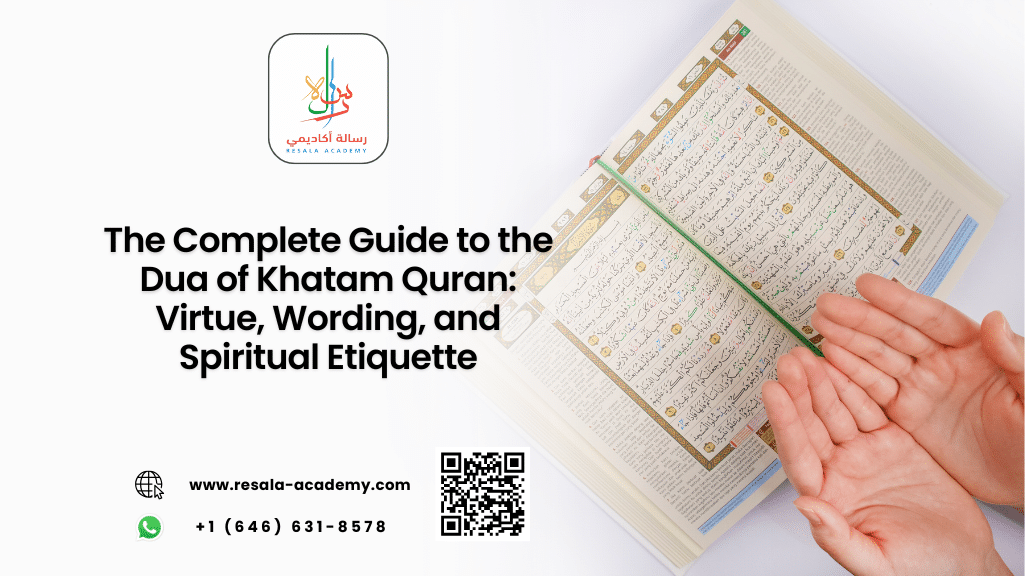
Completing the recitation of the entire Quran is one of the most spiritually rewarding milestones a Muslim can achieve. Whether it is your first completion or one of many, the moment of khatam (finishing) carries deep significance in the life of every believer. At this blessed occasion, raising your hands in supplication is a cherished practice rooted in the traditions of the righteous predecessors. Understanding the dua of khatam quran helps you make the most of this sacred moment.
Yet many Muslims, especially non-Arabic speakers, find themselves uncertain about what to say, how to say it, and what etiquette to observe when finishing the Quran. This guide provides a clear, evidence-based explanation of the dua of khatam quran, its spiritual importance, authentic wording, and the best practices that surround it — all grounded firmly in the Quran and Sunnah according to Sunni scholarship.
The Spiritual Significance of Completing the Quran
The act of finishing the Quran from cover to cover holds a special status in Islam. Scholars throughout history have emphasized the blessings attached to this occasion.
Why Khatam al-Quran Is a Momentous Achievement
Completing the recitation of Allah’s Book is not merely an academic exercise — it is an act of worship that draws a believer closer to Allah. Every letter recited carries reward, as the Prophet Muhammad ﷺ said:
Arabic:
“ مَنْ قَرَأَ حَرْفًا مِنْ كِتَابِ اللَّهِ فَلَهُ بِهِ حَسَنَةٌ وَالْحَسَنَةُ بِعَشْرِ أَمْثَالِهَا لاَ أَقُولُ الم حَرْفٌ وَلَكِنْ أَلِفٌ حَرْفٌ وَلاَمٌ حَرْفٌ وَمِيمٌ حَرْفٌ ” .
English Translation:
“[Whoever recites a letter] from Allah’s Book, then he receives the reward from it, and the reward of ten the like of it. I do not say that Alif Lam Mim is a letter, but Alif is a letter, Lam is a letter and Mim is a letter.”
Imagine, then, the immense reward accumulated by the time a Muslim has recited every single verse of the Quran. This is why the moment of khatam is considered a time of great spiritual openness and closeness to Allah.
The Practice of Making Dua at Khatam al-Quran
The tradition of supplicating upon completing the Quran is well-established among the companions and the early generations of Muslims. The great companion Anas ibn Malik (may Allah be pleased with him) used to gather his family members whenever he completed the Quran in order to make dua together. This practice, reported by Imam al-Darimi, demonstrates that the Salaf treated the completion of the Quran as a communal spiritual event where supplication is especially valued.
Scholars such as Imam al-Nawawi and Ibn Taymiyyah acknowledged that dua at the time of completing the Quran is a recommended and praiseworthy act. The underlying principle is that moments of obedience and devotion are among the best times to call upon Allah, and few acts of obedience are greater than reciting His entire Book.
The Dua of Khatam Quran: What to Say
There is no single mandatory, fixed supplication prescribed by the Prophet ﷺ specifically for the completion of the Quran. However, scholars have recommended certain supplications based on general Quranic and prophetic teachings.
General Supplications Recommended at Khatam
Upon completing the Quran, a Muslim may make any sincere dua, asking Allah for forgiveness, guidance, mercy, and well-being. Among the most commonly recited supplications at this occasion are:
1. Asking Allah for sincerity and acceptance:
رَبَّنَا تَقَبَّلْ مِنَّآ ۖ إِنَّكَ أَنتَ ٱلسَّمِيعُ ٱلْعَلِيمُ
“Our Lord! Accept ˹this˺ from us. You are indeed the All-Hearing, All-Knowing.”
2. Seeking steadfastness and guidance:
رَبَّنَا لَا تُزِغْ قُلُوبَنَا بَعْدَ إِذْ هَدَيْتَنَا وَهَبْ لَنَا مِن لَّدُنكَ رَحْمَةً ۚ إِنَّكَ أَنتَ ٱلْوَهَّابُ
˹They say,˺ “Our Lord! Do not let our hearts deviate after you have guided us. Grant us Your mercy. You are indeed the Giver ˹of all bounties˺.
3. Supplicating for benefit from the Quran:
“ اللَّهُمَّ انْفَعْنِي بِمَا عَلَّمْتَنِي وَعَلِّمْنِي مَا يَنْفَعُنِي وَزِدْنِي عِلْمًا وَالْحَمْدُ لِلَّهِ عَلَى كُلِّ حَالٍ ” .
‘Allahummanfa’ni bima ‘allamtani, wa ‘allimnima yanfa’uni, wa zidni ‘ilman. Wal-hamdu Lillahi ‘ala kulli hal.
[O Allah, benefit me by that which You have taught me, and teach me that which will benefit me, and increase my knowledge. Praise is to Allah in all circumstances].'”
Personalizing Your Dua After Completing the Quran
One of the beautiful aspects of Islamic supplication is that it is deeply personal. After reciting any established supplications, you are encouraged to speak to Allah in your own words — asking for whatever is in your heart. Scholars remind us that the dua of khatam quran is an opportunity to ask for both worldly and spiritual needs, to pray for loved ones, and to seek protection from hardship.
For non-Arabic speakers, understanding the meaning behind these supplications transforms the experience from mere recitation into heartfelt communication with Allah. This is where learning Arabic becomes invaluable.
Institutions like Resala Academy offer structured Arabic language and Quran courses that help non-native learners build genuine comprehension, enabling them to connect with the Quran and its supplications on a much deeper level.
Etiquette and Best Practices for Khatam al-Quran
Observing proper etiquette at the time of completing the Quran enhances the spiritual benefit of the occasion.
Before the Dua
Perform wudu (ablution) before your final recitation session, as being in a state of purity is recommended when handling and reciting the Quran. Choose a clean, quiet place free from distractions. Many scholars recommend completing the Quran during the last third of the night or after a prayer, as these are times when dua is more readily accepted.
During the Dua
Raise your hands in supplication, face the qiblah, and begin by praising Allah and sending salawat (blessings) upon the Prophet ﷺ. Express gratitude to Allah for granting you the ability to complete His Book. Then make your supplications with sincerity, humility, and conviction that Allah hears and responds.
After the Dua
It is a recommended Sunnah to immediately begin reciting Surah al-Fatihah and the opening verses of Surah al-Baqarah after completing the Quran. This practice, mentioned by scholars, symbolizes the continuous, unending relationship a Muslim should have with the Book of Allah — one completion flows naturally into the next.
The Virtue of Regularly Completing the Quran
Making the dua of khatam quran is not meant to be a once-in-a-lifetime experience. The companions of the Prophet ﷺ completed the Quran regularly, with some finishing it every month and others more frequently.
Building a Consistent Quran Routine
Allah says in the Quran:
إِنَّ ٱلَّذِينَ يَتْلُونَ كِتَـٰبَ ٱللَّهِ وَأَقَامُوا۟ ٱلصَّلَوٰةَ وَأَنفَقُوا۟ مِمَّا رَزَقْنَـٰهُمْ سِرًّۭا وَعَلَانِيَةًۭ يَرْجُونَ تِجَـٰرَةًۭ لَّن تَبُورَ
Surely those who recite the Book of Allah, establish prayer, and donate from what We have provided for them—secretly and openly—˹can˺ hope for an exchange that will never fail,
Establishing a daily portion (wird) of Quran recitation ensures that you complete the Quran regularly and experience the blessed moment of khatam repeatedly. For learners who are still developing their recitation skills, Resala Academy provides personalized Quran programs with qualified teachers who guide students from basic reading to fluent, tajweed-compliant recitation — making regular khatam an achievable goal even for beginners.
Start Your Quran Journey with Resala Academy
If reading this guide has inspired you to deepen your connection with the Quran, there is no better time to begin than now. Resala Academy is a leading online academy designed specifically for non-native speakers who want to learn Arabic, master Quran recitation, and study Islamic sciences with qualified instructors.
Whether you are a complete beginner who has never read the Quran in Arabic or an intermediate learner working toward your first khatam, Resala Academy offers flexible, one-on-one lessons tailored to your level and goals.
Students benefit from structured curricula in tajweed, Quranic Arabic, and Islamic studies — all delivered in an encouraging and supportive learning environment. With Resala Academy, the dream of completing the Quran with understanding and making the dua of khatam quran with full comprehension becomes a realistic, guided journey. Book Free Trial Now!
Frequently Asked Questions (FAQs)
1. Is there a specific dua prescribed by the Prophet ﷺ for completing the Quran?
There is no single specific dua authentically narrated from the Prophet ﷺ exclusively for khatam al-Quran. However, the practice of making dua upon completion is established from the companions, and scholars recommend using authentic Quranic and prophetic supplications along with personal dua.
2. Do I need to understand Arabic to make the dua of khatam quran properly?
While you can recite established Arabic supplications without understanding every word, learning Arabic significantly deepens your spiritual experience. Understanding what you are asking Allah transforms your dua from repetition into heartfelt conversation, which is why programs like those at Resala Academy are so valuable for non-native speakers.
3. How often should I aim to complete the Quran?
Scholars generally recommend completing the Quran at least once a month, which requires reciting approximately one juz (part) per day. Beginners should set realistic goals and gradually increase their daily recitation as their fluency improves, prioritizing consistency over speed.
4. Can I make dua in my own language after completing the Quran?
Yes, according to the majority of Sunni scholars, you may supplicate to Allah in any language, especially outside of salah. While Arabic is preferred, sincerity and humility are what matter most. As you learn more Arabic over time, you can incorporate more Arabic supplications into your dua.
5. What if I struggle with tajweed and recitation — should I still try to complete the Quran?
Absolutely. The Prophet ﷺ said that the one who struggles with the Quran receives double the reward — one for the recitation and one for the effort (Sahih al-Bukhari 4937). Enrolling in a guided course with a qualified teacher, such as those offered by Resala Academy, helps you improve steadily while earning immense reward for every effort you make.
Conclusion
The dua of khatam quran represents one of the most spiritually significant moments in a Muslim’s journey with the Book of Allah. It is a time of gratitude, humility, and heartfelt supplication — a moment when the believer stands before Allah having completed the recitation of His entire revelation. By understanding the authentic practices, proper etiquette, and recommended supplications, every Muslim can make this occasion deeply meaningful and spiritually transformative.
Learning Arabic and Quran recitation is the key that unlocks the full beauty of this experience. For non-native speakers seeking a reliable, structured, and supportive path to Quranic fluency, Resala Academy stands as a trusted partner in that journey — helping learners move from hesitant readers to confident reciters who complete the Quran with understanding, devotion, and the ability to raise their hands in dua knowing exactly what they are asking their Lord.