Table of Contents
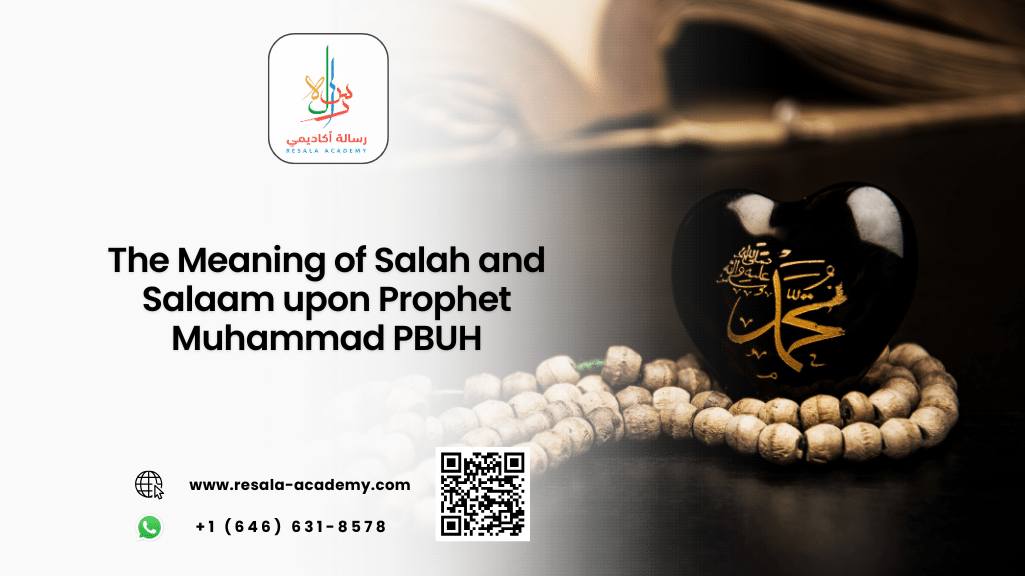
The Meaning of Salah and Salaam upon Prophet Muhammad PBUH
Every day, millions of Muslims around the world repeat the phrase “Salla Allahu Alayhi wa Sallam” after hearing or saying the name of Prophet Muhammad ﷺ. But how many of us truly understand the meaning of salah and salaam upon Prophet Muhammad PBUH? What exactly are we asking Allah to do when we utter these blessed words?
Understanding the depth behind this phrase transforms it from a habitual utterance into a conscious act of worship that strengthens your connection with both Allah and His Messenger ﷺ. Whether you are a new Muslim, a lifelong believer, or someone beginning to study the Quran and Arabic language, grasping this meaning enriches every aspect of your spiritual practice.
At Resala Academy, where students can explore online Arabic course with native Egyptian tutors, learners often discover that understanding phrases like these marks a turning point in their relationship with the Quran.
In this article, you will learn what salah and salaam truly mean, why Allah commanded believers to send them upon the Prophet ﷺ, how to say them correctly in Arabic, and the immense spiritual rewards that accompany this practice.
Understanding the Meaning of Salah and Salaam upon the Prophet ﷺ
The phrase most Muslims know as “sending blessings upon the Prophet” carries layers of meaning rooted in the Arabic language and Islamic theology. To truly appreciate it, we must examine each word individually.
What Does “Salah” Mean in This Context?
The Arabic word صَلَاة (Salah) is most commonly associated with the five daily prayers. However, when used in the context of sending blessings upon the Prophet ﷺ, its meaning shifts depending on who is performing it.
When Allah sends salah upon the Prophet ﷺ, the scholars of Ahl al-Sunnah wa al-Jama’ah — including Imam Ibn al-Qayyim and Imam Abu al-Aliyah — explain that it means Allah praises and honors the Prophet ﷺ before the angels in the highest assembly. It is Allah’s way of elevating the Prophet’s mention and status.
When the angels send salah upon the Prophet ﷺ, it means they make supplication (du’a) to Allah on his behalf, asking Allah to continue blessing and honoring him.
When the believers send salah upon the Prophet ﷺ, it means they are asking Allah to bestow His praise, mercy, and blessings upon the Prophet ﷺ. So when you say “اللَّهُمَّ صَلِّ عَلَى مُحَمَّدٍ” (Allahumma salli ‘ala Muhammad), you are saying: “O Allah, send Your blessings and praise upon Muhammad.”
What Does “Salaam” Mean When Sent upon the Prophet ﷺ?
The word سَلَام (Salaam) means peace, safety, and protection from every harm and imperfection. When believers send salaam upon the Prophet ﷺ, they are asking Allah to grant him peace, protect his legacy, and preserve his message from distortion.
The combined phrase “صَلَّى اللَّهُ عَلَيْهِ وَسَلَّمَ” (Salla Allahu Alayhi wa Sallam) therefore means: “May Allah send His blessings and praise upon him, and grant him peace.” It is both an expression of love and a du’a — a supplication that connects the believer to the Prophet ﷺ across time and space.
Why Are Salah and Salaam Always Mentioned Together?
In the Quran, Allah pairs salah with salaam in His direct command to the believers. The wisdom behind this is profound:
Salah represents the seeking of honor and elevation for the Prophet ﷺ, while Salaam represents the seeking of protection and safety for him and his mission. Together, they form a complete expression of reverence, love, and supplication that fulfills a divine instruction no believer can afford to overlook.
Quranic and Prophetic Evidence for Sending Salah and Salaam
The command to send salah and salaam upon the Prophet ﷺ is not a cultural custom — it is a divine obligation established in the Quran and reinforced by multiple authentic hadiths.
The Divine Command in Surah Al-Ahzab (33:56)
Allah says in the Quran:
إِنَّ ٱللَّهَ وَمَلَـٰٓئِكَتَهُۥ يُصَلُّونَ عَلَى ٱلنَّبِىِّ ۚ يَـٰٓأَيُّهَا ٱلَّذِينَ ءَامَنُوا۟ صَلُّوا۟ عَلَيْهِ وَسَلِّمُوا۟ تَسْلِيمًا
“Indeed, Allāh confers blessing upon the Prophet, and His angels [ask Him to do so]. O you who have believed, ask [Allāh to confer] blessing upon him and ask [Allāh to grant him] peace.”
— Surah Al-Ahzab 33:56
This verse is remarkable because Allah begins by telling us that He Himself, along with His angels, sends salah upon the Prophet ﷺ. Then He commands the believers to do the same. When the Creator of the heavens and earth honors His Messenger in this way, it becomes clear why this act of worship holds such immense weight.
For non-Arabic speakers, notice the word صَلُّوا (Sallu) — this is the imperative (command) form of salah, directed at the believers. And سَلِّمُوا تَسْلِيمًا (Sallimu Tasleema) uses a grammatical structure called the مفعول مُطلق (maf’ul mutlaq), an absolute object that intensifies the meaning. It does not simply say “send peace” — it says “send peace in the most complete and emphatic way possible.” This is a linguistic detail that students of Quranic Arabic come to appreciate deeply.
Prophetic Hadith on the Reward of Salawat
The Prophet ﷺ himself taught the Ummah about the immense reward of this practice:
The Prophet ﷺ said: “صَلُّوا عَلَىَّ فَإِنَّهُ مَنْ صَلَّى عَلَىَّ صَلاَةً صَلَّى اللَّهُ عَلَيْهِ بِهَا عَشْرًا”
“Invoke a blessing on me, for everyone who invokes a blessing on me will receive ten blessings from Allah”
— Sahih Muslim 384
This means that for every single time you say “اللَّهُمَّ صَلِّ عَلَى مُحَمَّدٍ”, Allah praises you, elevates your rank, and blesses you — not once, but ten times. This is a transaction with Allah in which the return is guaranteed and multiplied beyond measure.
How to Properly Send Salah and Salaam upon Prophet Muhammad PBUH
Knowing the meaning of salah and salaam upon Prophet Muhammad PBUH is the foundation — but learning to say it correctly in Arabic deepens the experience and increases your reward.
The Most Well-Known Formulas of Salawat
There are several authentic formulas taught by the Prophet ﷺ himself. The most common and widely recited include:
- الصَّلَاةُ الإِبْرَاهِيمِيَّة (As-Salah al-Ibrahimiyyah): This is the salawat recited in the final sitting (tashahhud) of every prayer — “Allahumma salli ‘ala Muhammadin wa ‘ala aali Muhammad, kama sallayta ‘ala Ibrahima wa ‘ala aali Ibrahim…” It is considered the most complete and virtuous form.
- صَلَّى اللَّهُ عَلَيْهِ وَسَلَّمَ (Salla Allahu Alayhi wa Sallam): The phrase spoken or written whenever the Prophet’s name ﷺ is mentioned. Though concise, it carries full reward when said with sincerity.
- اللَّهُمَّ صَلِّ وَسَلِّمْ عَلَى نَبِيِّنَا مُحَمَّدٍ (Allahumma Salli wa Sallim ‘ala Nabiyyina Muhammad): A brief yet comprehensive formula meaning “O Allah, send blessings and peace upon our Prophet Muhammad.”
Pronunciation Tips for Non-Arabic Speakers
For non-Arabic speakers, pronouncing these phrases correctly is an act of care and respect. The word صَلِّ (Salli) begins with the Arabic letter ص (Sad), which is an emphatic “S” sound produced with the tongue pressed flat against the roof of the mouth. It is distinctly different from the regular س (Sin). Mixing the two changes the quality and precision of the word entirely.
The double ل (Lam) in صَلِّ carries a شَدَّة (Shaddah), meaning the “L” sound is stressed and held slightly longer. Skipping this emphasis is a common mistake among learners that a trained ear can catch immediately.
At Resala Academy, students studying Tajweed — the rules governing proper Quran recitation — and Arabic pronunciation work one-on-one with native Egyptian tutors who correct these nuances in real time, ensuring that learners develop accurate habits from the very beginning.
Virtues and Spiritual Rewards of Sending Salah and Salaam
Beyond being a command from Allah, sending salah and salaam upon the Prophet ﷺ carries extraordinary spiritual benefits that touch every aspect of a Muslim’s life.
Nearness to the Prophet ﷺ on the Day of Judgment
The Prophet ﷺ said: “أَوْلَى النَّاسِ بِي يَوْمَ الْقِيَامَةِ أَكْثَرُهُمْ عَلَىَّ صَلاَةً” — “The person closest to me on the Day of Judgement is the one who sent the most Salat upon me.” (Jami’ at-Tirmidhi 484). Imagine the honor of being near the Prophet ﷺ on the most critical day in human history — and the path to that honor is simply the sincere repetition of salah and salaam.
Forgiveness of Sins and Answering of Supplications
Scholars have noted that sending salawat before and after making du’a is one of the most effective means of having that du’a accepted by Allah. The Prophet ﷺ taught that du’a remains suspended between the heavens and the earth until salawat is sent upon him. Incorporating salah and salaam into your daily supplications is not merely recommended — it is a strategic act of worship that amplifies every prayer you make.
When and How Often Should You Send Salah and Salaam?
Understanding the meaning of salah and salaam upon Prophet Muhammad PBUH naturally leads to the question: when and how often should we practice it?
Recommended and Emphasized Occasions
Scholars have identified several occasions when sending salah and salaam is especially emphasized:
- Upon hearing the Prophet’s name ﷺ — it is considered blameworthy to hear his name without responding with salawat.
- On Fridays (Yawm al-Jumu’ah) — the Prophet ﷺ said: “Invoke more blessings on me that day, for your blessings will be submitted to me.” (Sunan Abu Dawud 1047).
- During the tashahhud in every obligatory and voluntary prayer.
- At the beginning and end of du’a to increase the likelihood of acceptance.
- After the adhan (call to prayer), as part of the supplication taught by the Prophet ﷺ.
Making Salawat Part of Your Daily Routine
One of the simplest yet most rewarding habits a Muslim can develop is setting aside time each day — even just a few minutes after Fajr or before sleep — to send salah and salaam upon the Prophet ﷺ.
Many scholars recommend sending salawat at least one hundred times daily. With a true understanding of its meaning, this practice becomes not a mechanical repetition but a spiritual conversation filled with love, gratitude, and hope.
For learners who want to deepen their understanding of these concepts through structured study, Resala Academy offers comprehensive Islamic courses that connect language learning with spiritual growth — helping students not only read the words but truly understand what they are saying.
Begin Your Journey of Understanding the Quran and Arabic with Resala Academy
If this article has awakened your desire to understand the Arabic words you speak in worship — to move from repetition to genuine comprehension — then taking a structured course is the most effective next step.
Resala Academy specializes in teaching Quran and Arabic to non-Arabic speakers through personalized, one-on-one sessions with certified native Egyptian tutors. Whether you want to master Tajweed, memorize the Quran, understand Quranic Arabic, or earn an Arabic language certificate, Resala Academy offers courses designed for your level and pace.
With flexible scheduling across all global time zones, top ratings on both Google and Trustpilot, professional certification for each completed level, and an affordable pricing model, every barrier between you and meaningful Islamic learning is removed.
Book your free trial class today and experience the difference of learning with teachers who care about your spiritual growth as much as your academic progress.
Frequently Asked Questions
What does “Salla Allahu Alayhi wa Sallam” mean in English?
It means “May Allah send His blessings and praise upon him and grant him peace.” It is a supplication asking Allah to honor and protect Prophet Muhammad ﷺ, and Muslims say it every time his name is mentioned.
Is sending salah and salaam upon the Prophet ﷺ obligatory?
Scholars agree that it is obligatory at least once in a Muslim’s lifetime and during the tashahhud in prayer. Beyond that, it is highly encouraged at every mention of the Prophet’s name ﷺ and especially on Fridays. Neglecting it when hearing his name is considered blameworthy by the majority of scholars.
Can I send salawat in English, or must it be in Arabic?
While the meaning can be conveyed in any language, reciting salawat in Arabic is strongly preferred because the specific Arabic words carry the precise meanings and blessings intended by the Quran and Sunnah. Learning the Arabic phrases — even for complete beginners — is achievable and deeply rewarding with proper guidance.
How can I learn to pronounce salawat correctly?
The most effective way is to study with a qualified Arabic-speaking tutor who can listen to your pronunciation and correct it in real time. Resala Academy offers Tajweed and Arabic pronunciation classes specifically designed for non-native speakers, with one-on-one sessions that build accurate habits from day one.
What is the best time to send salah and salaam upon the Prophet ﷺ?
Fridays carry special emphasis, as the Prophet ﷺ specifically encouraged increasing salawat on that day. Beyond Fridays, sending salah and salaam after the adhan, during du’a, in the tashahhud, and at any quiet moment throughout the day are all highly virtuous practices with immense reward.
Conclusion
The meaning of salah and salaam upon Prophet Muhammad PBUH is far richer than most Muslims realize. It is not simply a phrase uttered out of habit — it is a divine command, a form of worship, and a direct means of earning Allah’s blessings tenfold.
When you understand that saying “صَلَّى اللَّهُ عَلَيْهِ وَسَلَّمَ” is asking the Creator to praise and honor His beloved Messenger and grant him eternal peace, the words take on a weight and beauty that transforms your daily practice.
Learning Arabic and Quranic sciences opens the door to understanding hundreds of phrases, verses, and supplications at this profound level. Resala Academy stands ready to guide you on this path — with expert native tutors, flexible courses, and a learning experience built around your growth.
Let every salah and salaam you send be one you truly understand, and let that understanding draw you ever closer to Allah and His Messenger ﷺ.