Table of Contents
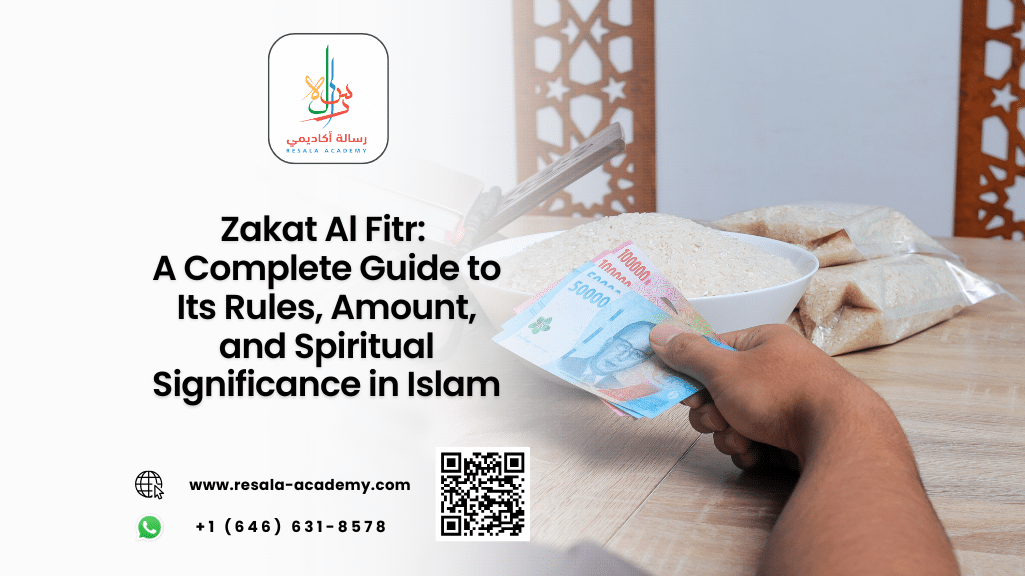
Zakat Al Fitr: A Complete Guide to Its Rules, Amount, and Spiritual Significance in Islam
As the blessed month of Ramadan draws to a close, every Muslim household turns its attention to one of the most important obligations tied to this sacred time — zakat al fitr. This charitable duty, often overlooked or misunderstood, carries deep spiritual meaning and serves a vital social function within the Muslim community.
Understanding what zakat al-fitr is, how much it costs, and when it should be given is essential for every believer who wants to complete Ramadan in the most rewarding way possible.
Whether you are a new Muslim, a non-Arabic speaker trying to understand Islamic rulings in their original language, or someone simply looking to refresh your knowledge, this guide covers everything you need to know.
From the evidence in the Quran and Sunnah to practical tips on using a zakat al fitr calculator, this post will walk you through every detail with clarity and accuracy, grounded firmly in Sunni Islamic scholarship.
What Is Zakat Al Fitr?
This section explains the definition, purpose, and religious significance of this annual obligation.
Definition and Meaning
Zakat al fitr, also known as sadaqat al-fitr, is a mandatory charitable payment that every Muslim must give at the end of Ramadan, before the Eid al-Fitr prayer. The word “fitr” refers to the breaking of the fast, which connects this form of charity directly to the completion of the fasting month.
Unlike zakat al-mal, which is calculated on accumulated wealth, zakat al-fitr is a fixed amount given per person in the household regardless of income level.
The Purpose Behind Zakat Al-Fitr
The wisdom behind this obligation is twofold.
First, it serves as a purification for the fasting person from any idle talk or shortcomings committed during Ramadan.
Second, it provides food and support to those in need so that they, too, can enjoy the day of Eid with dignity.
This dual purpose — spiritual purification and social solidarity — reflects the comprehensive nature of Islamic worship.
Evidence from the Sunnah
The obligation of zakat al fitr is firmly established in the authentic Sunnah of the Prophet Muhammad ﷺ. Ibn Umar (may Allah be pleased with him) reported:
Arabic:
فَرَضَ رَسُولُ اللَّهِ صلى الله عليه وسلم زَكَاةَ الْفِطْرِ صَاعًا مِنْ تَمْرٍ، أَوْ صَاعًا مِنْ شَعِيرٍ عَلَى الْعَبْدِ وَالْحُرِّ، وَالذَّكَرِ وَالأُنْثَى، وَالصَّغِيرِ وَالْكَبِيرِ مِنَ الْمُسْلِمِينَ، وَأَمَرَ بِهَا أَنْ تُؤَدَّى قَبْلَ خُرُوجِ النَّاسِ إِلَى الصَّلاَةِ.
English Translation:
Allah’s Messenger (ﷺ) enjoined the payment of one Sa’ of dates or one Sa’ of barley as Zakat-ul-Fitr on every Muslim slave or free, male or female, young or old, and he ordered that it be paid before the people went out to offer the `Id prayer. (One Sa’ = 3 Kilograms approx.)
This hadith makes it clear that zakat al-fitr applies universally to every Muslim, and the head of the household is responsible for paying it on behalf of all dependents.
How Much Is Zakat Al Fitr?
One of the most common questions Muslims ask every Ramadan is: how much is zakat al fitr this year?
The Traditional Measurement
The Prophet ﷺ prescribed one sa’ of food per person. A sa’ is an ancient unit of measurement roughly equivalent to 2.5 to 3 kilograms of a staple food such as dates, barley, wheat, or rice.
Scholars of the four Sunni madhabs agree that zakat al-fitr should be given from the staple food of the land, which in many modern contexts means rice, wheat, or their monetary equivalent.
Monetary Equivalent and the Zakat Al Fitr Calculator
In many countries today, Islamic authorities announce a fixed monetary amount each year based on the local price of staple foods. A zakat al fitr calculator can help you determine the exact amount based on your location and family size.
For example, if the local price of rice is a certain amount per kilogram, the calculator multiplies that by approximately 2.5–3 kg and then by the number of people in your household.
Many trusted Islamic organizations and websites offer a zakat al fitr calculator that updates annually, making it easy to fulfill this obligation accurately. Always consult your local Islamic authority or a reliable scholarly source to confirm the exact amount for your region.
How Much Zakat Al Fitr Per Person
To put it simply, how much zakat al fitr you owe depends on two factors: the price of the staple food in your area and the number of individuals you are responsible for. A family of five, for instance, would owe five times the individual amount.
Who Must Pay Zakat Al-Fitr and Who Receives It?
Understanding eligibility — both for giving and receiving — is crucial for fulfilling this obligation correctly.
Who Is Obligated to Pay
According to the majority of Sunni scholars, zakat al fitr is obligatory upon every Muslim who possesses food or wealth beyond what is needed for themselves and their dependents on the day and night of Eid. The head of the household pays on behalf of all family members, including children and elderly relatives under their care.
Who Is Eligible to Receive Zakat Al-Fitr
The recipients of zakat al-fitr are the poor and needy (al-fuqara’ wa al-masakin). The primary goal, as mentioned in the hadith of Ibn Abbas (may Allah be pleased with him), is to ensure that those in need are not left without provisions on the day of Eid:
Arabic:
فَرَضَ رَسُولُ اللَّهِ صلى الله عليه وسلم زَكَاةَ الْفِطْرِ طُهْرَةً لِلصَّائِمِ مِنَ اللَّغْوِ وَالرَّفَثِ وَطُعْمَةً لِلْمَسَاكِينِ مَنْ أَدَّاهَا قَبْلَ الصَّلاَةِ فَهِيَ زَكَاةٌ مَقْبُولَةٌ وَمَنْ أَدَّاهَا بَعْدَ الصَّلاَةِ فَهِيَ صَدَقَةٌ مِنَ الصَّدَقَاتِ .
English Translation:
The Messenger of Allah (ﷺ) prescribed the sadaqah (alms) relating to the breaking of the fast as a purification of the fasting from empty and obscene talk and as food for the poor. If anyone pays it before the prayer (of ‘Id), it will be accepted as zakat. If anyone pays it after the prayer, that will be a sadaqah like other sadaqahs (alms).
When Should Zakat Al Fitr Be Paid?
Timing is an essential aspect of this obligation that many Muslims need clarity on.
The Preferred Time
The best time to give zakat al-fitr is after the Fajr prayer on the day of Eid al-Fitr and before the Eid prayer. This ensures that the recipients have time to benefit from it on the day of celebration itself.
The Permissible Window
Most scholars permit giving zakat al-fitr one or two days before Eid, based on the practice of the Companions. However, delaying it beyond the Eid prayer without a valid excuse is considered sinful according to the majority of Sunni scholars, and the charity then becomes a regular sadaqah rather than the obligatory zakat al-fitr.
Read more about: The Essential Rules of Ramadan Every Muslim Should Know and Practice
The Connection Between Zakat Al Fitr and Quranic Learning
The Quran repeatedly emphasizes the importance of purifying one’s wealth and soul through charity. Allah says:
Arabic:
خُذْ مِنْ أَمْوَٰلِهِمْ صَدَقَةًۭ تُطَهِّرُهُمْ وَتُزَكِّيهِم بِهَا
English Translation:
Take from their wealth ˹O Prophet˺ charity to purify and bless them
Understanding verses like these in their original Arabic unlocks a deeper appreciation of Islamic obligations such as zakat al-fitr. This is where institutions like Resala Academy play a meaningful role. As a leading online academy for non-native speakers, Resala Academy offers structured courses in Arabic language, Quran learning, and Islamic Studies, helping learners engage with the Quran and Sunnah directly in Arabic rather than relying solely on translations.
Deepen Your Understanding of Islam with Resala Academy
If reading about zakat al fitr has inspired you to learn more about Islamic rulings in their original language, there has never been a better time to start. Resala Academy provides non-native speakers with a carefully designed learning experience that includes one-on-one Quran sessions, Arabic language courses from beginner to advanced levels, and comprehensive Islamic Studies programs.
Learners at Resala Academy benefit from qualified native-Arabic instructors, flexible scheduling that fits any lifestyle, and a curriculum rooted in authentic Sunni scholarship. Whether your goal is to recite the Quran with proper tajweed, understand the meaning of the verses you read in salah, or study fiqh topics like zakat al-fitr in depth, Resala Academy equips you with the tools and guidance to succeed. Book Free Trial Now!
Frequently Asked Questions (FAQs)
1. Is it difficult for non-Arabic speakers to learn about zakat al fitr in Arabic?
Not at all. With the right guidance and a structured curriculum, non-native speakers can gradually build their Arabic vocabulary around Islamic topics. Resala Academy, for example, integrates Islamic terminology into its Arabic courses so learners can understand rulings like zakat al-fitr directly from classical sources.
2. Can I use a zakat al fitr calculator online, and are they reliable?
Yes, many reputable Islamic organizations provide a zakat al fitr calculator that is updated yearly. These tools are generally reliable, but it is always wise to cross-check with your local mosque or a trusted scholar to confirm the amount for your specific region.
3. How can I stay consistent in learning Quran and Islamic Studies?
Consistency comes from having a structured routine and an accountable learning environment. Enrolling in a program like Resala Academy, where sessions are scheduled and progress is tracked, helps learners stay motivated and on course throughout the year.
4. Do I need to understand Arabic to fully grasp Islamic obligations like zakat al-fitr?
While translations are helpful, understanding Arabic allows you to access the original texts of the Quran and hadith without intermediary interpretation. Even a foundational level of Arabic significantly enhances your comprehension of worship, rulings, and spiritual meanings.
5. What if I find it hard to apply what I learn about Islam in daily life?
Practical application becomes much easier when knowledge is built on a strong foundation. Programs that combine Quranic recitation with Islamic Studies — like those offered at Resala Academy — help learners connect theory with practice, making it natural to implement what they learn in their everyday worship and interactions.
Conclusion
Zakat al fitr is far more than a financial obligation — it is a profound act of worship that purifies the fasting person, uplifts the poor, and strengthens the bonds of the Muslim community at the close of Ramadan. Understanding its rules, amount, timing, and recipients is the responsibility of every Muslim, and engaging with this knowledge in its original Arabic language deepens both comprehension and spiritual connection.
For non-native speakers eager to move beyond translations and truly engage with the Quran, Sunnah, and Islamic jurisprudence, Resala Academy stands as a trusted and effective pathway.
With expert instructors, flexible online learning, and a curriculum grounded in authentic Sunni scholarship, Resala Academy empowers learners around the world to build a meaningful, lasting relationship with the Arabic language and Islamic knowledge.