Table of Contents
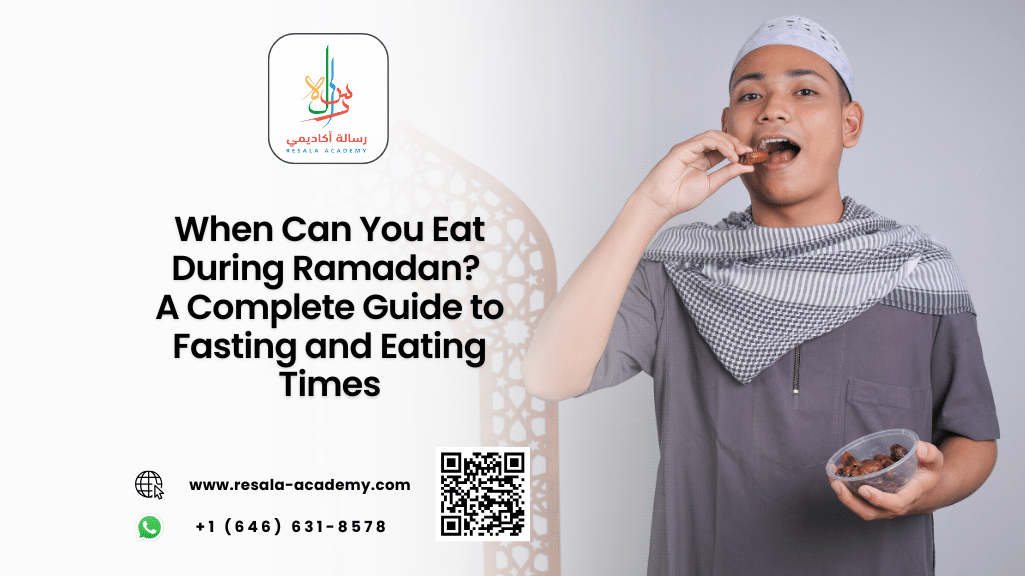
When Can You Eat During Ramadan? A Complete Guide to Fasting and Eating Times
Every year, millions of Muslims around the world observe the sacred month of Ramadan by fasting from dawn to sunset. For new Muslims, converts, and non-Arabic speakers, one of the most common questions that arises is: when can you eat during Ramadan? Understanding the precise timing of eating and fasting is essential to fulfilling this pillar of Islam correctly and with confidence.
The rules surrounding Ramadan fasting are both simple and deeply meaningful. They are rooted in the Quran and the Sunnah of the Prophet Muhammad (peace be upon him), and they carry spiritual, physical, and communal significance. Whether you are fasting for the first time or seeking a deeper understanding of the practice, this guide will clarify exactly when you can eat and drink during Ramadan, when you must abstain, and how to make the most of this blessed month.
At Resala Academy, a leading online academy for non-native speakers specializing in Arabic language, Quran learning, and Islamic Studies, learners from around the world gain the tools they need to understand these practices directly from their original sources.
Understanding the Basics of Fasting in Ramadan
Fasting during Ramadan is one of the five pillars of Islam and is obligatory for every adult Muslim who is physically and mentally capable.
What Does Fasting in Ramadan Mean?
Fasting in Ramadan, known as sawm in Arabic, means abstaining from all food, drink, and other invalidators from the break of dawn (Fajr) until sunset (Maghrib). This is not merely a dietary restriction but a comprehensive act of worship that includes restraining the tongue, eyes, and heart from sinful behavior. The fast begins each day at the time of Fajr prayer and ends at the time of Maghrib prayer, which shifts slightly each day depending on geographic location and time of year.
Who Is Required to Fast?
Fasting is obligatory upon every Muslim who is adult (baligh), sane, healthy, and not traveling. Women who are menstruating, pregnant, or breastfeeding may be exempt, as are the elderly and those with chronic illness. Those who miss fasting days are generally required to make them up later or, in some cases, pay fidyah (a form of compensation). Understanding these rulings helps Muslims observe the month with both devotion and ease.
Read more about: Understanding Ramadan Quotes: A Linguistic and Spiritual Journey for Non-Native Speakers
When Can You Eat During Ramadan?
This is the central question many learners and new Muslims ask. The answer is straightforward but requires attention to prayer times and local schedules.
Eating During Suhoor (Pre-Dawn Meal)
The first time when you can eat during Ramadan is during suhoor, the pre-dawn meal. Suhoor is eaten before the Fajr (dawn) prayer time begins. The Prophet Muhammad (peace be upon him) strongly encouraged eating suhoor, as narrated in the following hadith:
Arabic:
“تَسَحَّرُوا فَإِنَّ فِي السَّحُورِ بَرَكَةً”
English Translation:
“Take Suhur as there is a blessing in it.”
Muslims are encouraged to delay suhoor as close to Fajr as possible, maximizing rest and ensuring they are well-nourished for the day ahead. Once the adhan of Fajr is called, eating and drinking must stop immediately.
Eating During Iftar (Sunset Meal)
The second time when you can eat during Ramadan is at iftar, the meal that breaks the fast at sunset. When the Maghrib prayer time enters, fasting Muslims are permitted — and encouraged — to break their fast without delay. The Prophet (peace be upon him) said:
Arabic:
“لَا يَزَالُ النَّاسُ بِخَيْرٍ مَا عَجَّلُوا الْفِطْرَ”
English Translation:
“The people will remain on the right path as long as they hasten the breaking of the fast.”
It is Sunnah to break the fast with fresh dates and water before performing the Maghrib prayer. After the prayer, a larger meal is typically enjoyed with family and community.
When Can You Eat and Drink During Ramadan at Night?
After iftar, Muslims are free to eat and drink throughout the night until the next suhoor time ends at Fajr. There are no restrictions on food or drink during the nighttime hours. This period between Maghrib and Fajr is when all eating, drinking, and nourishment takes place during Ramadan.
When Can You Not Eat During Ramadan?
Understanding when you cannot eat during Ramadan is just as important as knowing when you can.
The Fasting Window: Fajr to Maghrib
From the moment the Fajr adhan is called until the Maghrib adhan, fasting Muslims must completely abstain from eating, drinking, and all other invalidators of the fast. This is confirmed in the Quran:
Arabic:
“لَكُمْ ۚ وَكُلُوا۟ وَٱشْرَبُوا۟ حَتَّىٰ يَتَبَيَّنَ لَكُمُ ٱلْخَيْطُ ٱلْأَبْيَضُ مِنَ ٱلْخَيْطِ ٱلْأَسْوَدِ مِنَ ٱلْفَجْرِ ۖ ثُمَّ أَتِمُّوا۟ ٱلصِّيَامَ إِلَى ٱلَّيْلِ ۚ”
English Translation:
“˹You may˺ eat and drink until you see the light of dawn breaking the darkness of night, then complete the fast until nightfall.”
This verse provides the divine foundation for the fasting schedule. The “white thread” and “black thread” refer to the light of dawn and the darkness of night, marking the precise boundaries of the daily fast.
What Happens If You Eat by Mistake?
According to Sunni Islamic jurisprudence, if a fasting person eats or drinks out of forgetfulness, their fast remains valid. The Prophet (peace be upon him) said:
Arabic:
“مَنْ نَسِيَ وَهُوَ صَائِمٌ فَأَكَلَ أَوْ شَرِبَ فَلْيُتِمَّ صَوْمَهُ فَإِنَّمَا أَطْعَمَهُ اللَّهُ وَسَقَاهُ”
English Translation:
“If somebody eats or drinks forgetfully then he should complete his fast, for what he has eaten or drunk, has been given to him by Allah.”
This ruling provides ease and mercy, especially for those who are new to fasting or still learning the practice.
Why Understanding Ramadan Eating Times Matters
Knowing exactly during Ramadan when you can eat is more than a logistical concern — it is a matter of worship.
Spiritual Significance of Proper Timing
Observing the correct eating and fasting times is an act of obedience to Allah. Each moment of hunger and thirst is an opportunity for spiritual growth, self-discipline, and gratitude. When Muslims understand the boundaries set by the Quran and Sunnah, their fasting becomes more intentional and rewarding.
The Role of Learning Arabic and Quran
Many of the rulings related to Ramadan are derived directly from Quranic verses and prophetic narrations in Arabic. For non-native speakers, learning Arabic unlocks a deeper, more personal connection to these texts. Resala Academy offers structured courses in Quranic Arabic and Islamic Studies, enabling learners to engage with the original sources of Islamic knowledge rather than relying solely on translations.
Deepen Your Understanding of Ramadan — Start Learning with Resala Academy
Ramadan is a month of transformation, and the best way to fully embrace its blessings is to understand the Quran and Sunnah in their original language. Resala Academy provides non-native speakers with expert-led online courses in Arabic, Quran memorization and recitation, and Islamic Studies — all designed for learners at every level.
Whether you want to read the Quran with proper tajweed, understand the verses about fasting without relying on translations, or build a strong foundation in Islamic knowledge, Resala Academy offers a flexible, supportive, and academically rigorous learning environment. Join thousands of learners worldwide who have already taken the step toward deeper Islamic understanding.
Start your journey with Resala Academy today and experience the Quran like never before.
Frequently Asked Questions (FAQs)
1. Is it difficult for beginners to learn Quranic Arabic?
Not at all. Quranic Arabic is taught in a structured, step-by-step manner at Resala Academy. Courses are designed specifically for non-native speakers, starting from the basics and building progressively. With consistent effort, most learners begin recognizing and understanding Quranic vocabulary within a few weeks.
2. How can I stay consistent with Quran and Arabic learning during Ramadan?
Ramadan is actually an ideal time to build learning habits because spiritual motivation is naturally higher. Setting a short daily study session — even 15 to 20 minutes — before or after iftar helps maintain consistency. Resala Academy’s flexible online schedule makes it easy to fit lessons around your Ramadan routine.
3. Do I need to understand Arabic to know when can you eat during Ramadan?
While English resources are helpful, understanding Arabic gives you direct access to the Quranic verses and hadiths that outline fasting rules. This eliminates confusion caused by varying translations and helps you apply the knowledge with confidence. Resala Academy bridges this gap for non-native learners effectively.
4. How do I apply what I learn about Islamic Studies in daily life?
Islamic Studies courses at Resala Academy are designed to be practical. You learn not only the theoretical aspects of worship, such as fasting rules, but also how to implement them correctly. Topics like prayer, fasting, and supplication are taught with real-life application in mind.
5. What if I struggle with understanding the meaning of Quran during recitation?
This is one of the most common challenges non-native learners face. Resala Academy addresses this by combining Quran recitation with vocabulary and tafseer (interpretation) lessons, so learners gradually build comprehension alongside their reading skills. Over time, the meaning behind each verse becomes clearer and more impactful.
Conclusion
Understanding when you can eat during Ramadan is fundamental to observing the fast correctly. Muslims eat during two key periods: suhoor before dawn and iftar at sunset, with complete freedom to eat and drink throughout the night. From Fajr to Maghrib, all food and drink are abstained from as an act of worship and obedience to Allah, in accordance with the clear guidance of the Quran and the Sunnah.
For non-native speakers, the journey toward fully understanding these practices begins with learning Arabic and studying the Quran from its original sources. Resala Academy stands as a trusted and effective pathway for learners worldwide, offering expert instruction in Arabic, Quran, and Islamic Studies that empowers students to connect with their faith on a deeper, more meaningful level. This Ramadan and beyond, invest in knowledge that will serve you in this life and the next.