Table of Contents
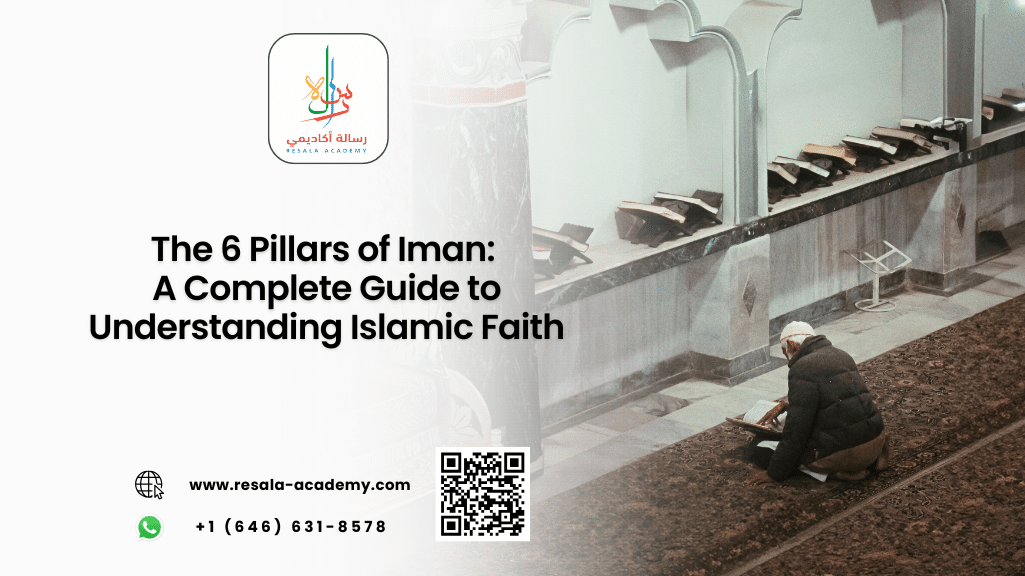
The 6 Pillars of Iman: A Complete Guide to Understanding Islamic Faith
Understanding the 6 pillars of iman is essential for every Muslim seeking to strengthen their connection with Allah and build a solid foundation of faith. These six fundamental beliefs form the core of Islamic creed and distinguish a believer from a non-believer in the sight of Allah.
Whether you are a new Muslim, a lifelong believer looking to deepen your knowledge, or a curious learner exploring Islamic teachings, grasping what are 6 pillars of iman will transform your spiritual journey. These pillars are not merely abstract concepts but living principles that shape a Muslim’s worldview, actions, and relationship with the Creator.
In this comprehensive guide, we will explore each of the 6 pillars of iman in detail, supported by evidence from the Quran and authentic Sunnah. You will discover their meanings, significance, and practical applications in daily life.
What Are the 6 Pillars of Iman?
The pillars of iman represent the core beliefs that every Muslim must hold in their heart with conviction and certainty.
Defining Iman in Islam
Iman, often translated as “faith” or “belief,” encompasses more than mere acknowledgment. In Islamic theology, iman involves three interconnected components:
- Belief in the heart – sincere conviction without doubt
- Affirmation with the tongue – verbal declaration of faith
- Action with the limbs – demonstrating faith through deeds
The Prophet Muhammad (peace be upon him) clearly defined the 6 pillars of iman in the famous Hadith of Jibreel when asked about iman:
Arabic: أَنْ تُؤْمِنَ بِاللَّهِ وَمَلاَئِكَتِهِ وَكُتُبِهِ وَرُسُلِهِ وَالْيَوْمِ الآخِرِ وَتُؤْمِنَ بِالْقَدَرِ خَيْرِهِ وَشَرِّهِ
Translation: “That you affirm your faith in Allah, in His angels, in His Books, in His Apostles, in the Day of Judgment, and you affirm your faith in the Divine Decree about good and evil.”
The 6 Pillars of Iman in Arabic
Learning the 6 pillars of iman in Arabic helps Muslims connect with the original sources and understand these concepts at a deeper level. The six pillars are:
- الإيمان بالله – Belief in Allah
- الإيمان بالملائكة – Belief in the Angels
- الإيمان بالكتب – Belief in the Divine Books
- الإيمان بالرسل – Belief in the Messengers
- الإيمان باليوم الآخر – Belief in the Last Day
- الإيمان بالقدر – Belief in Divine Decree
At Resala Academy, students learn to read and understand these Arabic terms directly from the Quran, enabling them to engage with Islamic texts authentically and build a stronger foundation in their faith.
The First Pillar: Belief in Allah
This foundational pillar establishes the entire framework of Islamic monotheism and a Muslim’s relationship with the Creator.
Understanding Tawheed
Belief in Allah means affirming His existence, His lordship over creation, His exclusive right to worship, and His perfect names and attributes. This concept, known as Tawheed, is the central message of Islam.
Allah says in the Quran:
Arabic: قُلْ هُوَ اللَّهُ أَحَدٌ اللَّهُ الصَّمَدُ لَمْ يَلِدْ وَلَمْ يُولَدْ وَلَمْ يَكُن لَّهُ كُفُوًا أَحَدٌ
Translation: “Say, ˹O Prophet,˺ “He is Allah—One ˹and Indivisible˺; Allah—the Sustainer ˹needed by all˺. He has never had offspring, nor was He born. And there is none comparable to Him.””
Source: Surah Al-Ikhlas 112:1-4
Practical Application
Believing in Allah transforms how a Muslim lives daily. It means relying on Him alone, fearing only Him, hoping in His mercy, and directing all worship exclusively to Him. This pillar eliminates anxiety about worldly matters and grounds the believer in certainty and peace.
The Second Pillar: Belief in the Angels
Angels are unseen creations of Allah made from light, and belief in them is essential to understanding the 6 pillars of iman.
Who Are the Angels?
Angels are noble servants of Allah who never disobey His commands. They perform various duties, including delivering revelation, recording deeds, and taking souls at death.
Notable angels include Jibreel (Gabriel), who delivered the Quran to Prophet Muhammad; Mikael, who manages provisions; Israfil, who will blow the trumpet on the Day of Judgment; and the angel of death.
Why Belief in Angels Matters
Knowing that angels record every deed encourages Muslims to be mindful of their actions in public and private. This awareness cultivates God-consciousness and moral accountability.
The Third Pillar: Belief in the Divine Books
Belief in the revealed scriptures connects Muslims to the broader chain of divine guidance sent throughout human history.
The Revealed Scriptures
Muslims believe in all the books Allah revealed to His messengers, including the Torah given to Musa (Moses), the Zabur (Psalms) given to Dawud (David), the Injeel (Gospel) given to Isa (Jesus), and the Quran given to Muhammad (peace be upon them all).
The Quran holds a unique position as the final revelation and the only scripture preserved in its original form. Allah declares:
Arabic: إِنَّا نَحْنُ نَزَّلْنَا الذِّكْرَ وَإِنَّا لَهُ لَحَافِظُونَ
Translation: “It is certainly We Who have revealed the Reminder, and it is certainly We Who will preserve it.”
The Importance of Learning Quranic Arabic
Understanding the Quran in its original Arabic unlocks profound meanings that translations cannot fully capture. Resala Academy’s Quran course offers specialized Quran learning programs designed for non-native speakers, helping students recite correctly with tajweed and comprehend the meanings of Allah’s words.
Read more about: When Was the Quran Written? A Complete Historical Journey Through Divine Revelation
The Fourth Pillar: Belief in the Messengers
Prophets and messengers were chosen individuals who conveyed Allah’s guidance to humanity across different times and nations.
The Chain of Prophethood
Muslims believe in all prophets from Adam to Muhammad (peace be upon them all), with no distinction in their truthfulness. Each messenger came with the same core message of worshipping Allah alone.
Prophet Muhammad (peace be upon him) is the final messenger, and his prophethood completes the chain of divine guidance. His Sunnah provides practical guidance for implementing the teachings of Islam.
Learning from the Prophetic Example
Studying the lives and teachings of the prophets, especially Prophet Muhammad, provides timeless lessons in patience, gratitude, worship, and character. Islamic Studies courses at Resala Academy help students explore prophetic biography (Seerah) and apply these lessons to modern life.
The Fifth Pillar: Belief in the Last Day
Belief in the Day of Judgment is a cornerstone of the 6 pillars of iman arabic and profoundly impacts a Muslim’s priorities and choices.
What Happens on the Last Day?
The Last Day includes resurrection, accountability, the scales of deeds, the bridge over Hell, and the final destination in Paradise or Hell. Every soul will be recompensed for their beliefs and actions.
Allah says:
Arabic: وَنَضَعُ ٱلْمَوَٰزِينَ ٱلْقِسْطَ لِيَوْمِ ٱلْقِيَـٰمَةِ فَلَا تُظْلَمُ نَفْسٌۭ شَيْـًۭٔا ۖ وَإِن كَانَ مِثْقَالَ حَبَّةٍۢ مِّنْ خَرْدَلٍ أَتَيْنَا بِهَا ۗ وَكَفَىٰ بِنَا حَـٰسِبِينَ
Translation: “We set up the scales of justice for the Day of Judgment, so no soul will be wronged in the least. And ˹even˺ if a deed is the weight of a mustard seed, We will bring it forth. And sufficient are We as a ˹vigilant˺ Reckoner.”
Living with the Afterlife in Mind
Belief in the Last Day motivates Muslims to prioritize good deeds, avoid sins, and remain patient during hardships. It provides perspective on life’s temporary nature and the eternal significance of one’s choices.
The Sixth Pillar: Belief in Divine Decree (Qadr)
Understanding and accepting divine decree completes the 6 pillars of iman and brings peace to the believer’s heart.
Understanding Qadr
Belief in Qadr means accepting that Allah has knowledge of all things, has written everything in the Preserved Tablet, wills all that occurs, and creates all things. Nothing happens outside His knowledge and permission.
This belief does not negate free will; rather, it acknowledges that human choices occur within Allah’s all-encompassing knowledge and wisdom.
Finding Peace Through Qadr
Trusting in divine decree helps Muslims navigate life’s trials with patience and gratitude. When difficulties arise, believers find comfort knowing that Allah’s wisdom surpasses human understanding.
Read more about: The Essential Dua for Breaking Fast: Complete Guide with Arabic Text, Translation, and Spiritual Significance
Begin Your Journey of Faith with Resala Academy
Deepen your understanding of the 6 pillars of iman by learning from qualified teachers who guide you with patience and expertise.
Resala Academy is a leading online academy serving non-native speakers worldwide. Our specialized programs in Arabic language, Quran learning, and Islamic Studies are designed to make authentic Islamic knowledge accessible from the comfort of your home.
Why learners succeed with Resala Academy:
- Native Arabic-speaking teachers with formal Islamic education
- Flexible scheduling to accommodate your lifestyle
- Structured curriculum progressing from beginner to advanced levels
- One-on-one sessions ensuring personalized attention
- Supportive learning environment encouraging consistency and growth
Whether you want to recite the Quran beautifully, understand its meanings in Arabic, or study the foundations of Islamic belief, Resala Academy provides the pathway to achieve your goals. Book free trial now!
Frequently Asked Questions
1. Is it difficult to memorize the 6 pillars of iman?
Memorizing the six pillars is straightforward because they follow a logical sequence. Start by learning them in English, then progress to the 6 pillars of iman in Arabic for deeper retention. Regular review and connecting them to Quranic verses strengthens memory.
2. How can I strengthen my belief in the unseen pillars like angels and divine decree?
Strengthening belief comes through knowledge. Study the Quran and authentic hadith that describe these concepts. Resala Academy’s Islamic Studies courses provide structured lessons that build conviction through evidence from primary sources.
3. Do I need to learn Arabic to understand the pillars of iman properly?
While translations offer valuable insights, learning Arabic unlocks direct access to the Quran and Sunnah. This removes reliance on interpretations and allows personal engagement with the sources. Even basic Arabic proficiency enhances understanding significantly.
4. How can I stay consistent in learning about my faith?
Consistency requires realistic goals and accountability. Set aside short daily or weekly sessions rather than long irregular ones. Joining a structured program with scheduled classes, like those at Resala Academy, provides the framework many learners need to stay on track.
5. How do the 6 pillars of iman differ from the 5 pillars of Islam?
The five pillars of Islam are outward acts of worship, including the testimony of faith, prayer, charity, fasting, and pilgrimage. The 6 pillars of iman are internal beliefs that form the foundation upon which these actions are built. Both are essential and interconnected.
Conclusion
The 6 pillars of iman represent the essential beliefs every Muslim must hold with certainty and sincerity. From belief in Allah to acceptance of divine decree, these pillars provide a comprehensive framework for understanding existence, purpose, and destiny.
Investing time to learn these pillars deeply, especially through their original Arabic sources, transforms abstract concepts into lived realities. Studying the Quran and Islamic sciences opens doors to spiritual growth, peace of mind, and closeness to Allah.
Resala Academy stands ready to support non-native learners on this journey. With expert teachers, flexible programs, and a learner-centered approach, achieving fluency in Arabic and Quran recitation becomes an attainable goal. Take the first step today and build your faith upon a foundation of authentic knowledge.